Babywearing International of Southern Maryland
Like us on Facebook!
  • Home
  • Resources
  • Blog
  • WE MOVED!

Tips and Tricks for Breastfeeding While Babywearing

8/5/2013

3 Comments

 
Happy World Breastfeeding Week!

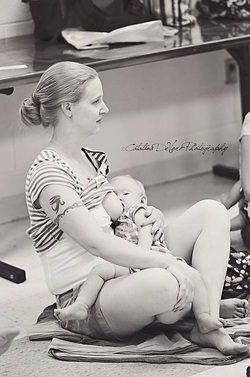
In honor of world breastfeeding week, we have compiled some tips for nursing in a carrier.
Picture
First, it’s hard to learn to use a carrier and learn to nurse a baby for the first time all at once.  It’s easiest to master each individually before you put them together.  So get to know your baby and get the hang of nursing.  Next, get to know your carrier and get that down.  Then, you’re ready to put it all together!

Dressing for Nursing while Babywearing

When  you’re nursing in a carrier, it’s MUCH easier to have a shirt or dress that can be pulled down from the top than one that must be lifted from the bottom.  Scoop neck or V-neck tees are favorites of a lot of moms.  Nursing tanks are also easy to work with.  It’s difficult to pull up a shirt that is under layers of wrap (or straps/buckles) and baby.  

Picture

Nursing Upright

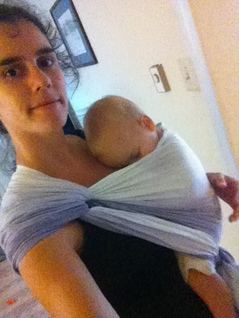
The simplest way is to keep baby upright and just lower baby to breast height.  This can be done in any carrier (mei tai, soft structured carrier, sling, or wrap).  Once you have baby at breast height, you can reach inside the carrier and aim your breast up toward baby to get baby latched on.  Aiming up is key to nursing in a carrier for many moms.  Typically, you’ll need a hand on baby’s head and a hand on your breast, at least at first.  
Picture

Nursing in a Cradle Carry

Picture
With a wrap or a ring sling, you can also nurse in a cradle carry.  In a ring sling, start with baby upright and tummy to tummy.  Loosen the sling slightly and take baby’s legs out of the sling on the ring side.  Guide baby’s head toward the opposite side from the rings.  You’ll need to keep a hand or elbow under baby’s head while nursing.   You can do the same in a wrap, but you’ll need to untie and adjust a little to get baby into a cradle position.  In a wrap, it might not be a full cradle carry, but more of a slightly tilted upright position. There are a few videos to show this below!

Supporting your Breast

Picture
Once you have baby latched on, there are a few tricks for supporting your breast.  What will work for you will depend on your breasts and baby, but here are some ideas:

  • Leave a hand inside the wrap/carrier to support your breast.  
  • Pull your breast on top of your shirt and allow the neckline of the shirt to support your breast.
  •  Leave your nursing bra latched (or even use a regular bra) and let your breast lie on top of the bra for support.
  • Tuck a small rolled up wash cloth under the breast to support it.
  • As your baby gets older, sometimes they will hold the breast at the right level themselves.  


Nursing Discretely

First, feel free to just nurse and not worry about nursing discretely.  Breasts are for feeding babies!  But if you’d prefer to be a bit more discrete here are a few tricks:

  •  Try it out in front of a mirror!  You’ll be surprised how much your baby’s head and the carrier naturally makes nursing a bit more discrete.  When you look down at yourself nursing, you can see your entire breast typically, but someone looking at you from across the room will probably just think your baby is sleeping.
  •  In a mei tai or soft structured carrier, you can shift the whole carrier a tad to the side you are nursing on.  Just take the waist and pull it gently toward the breast you are nursing.  This will give more coverage of the side of your breast while you are nursing. You can also use the hood of the carrier as an extra cover. 

Picture
  •   In a ring sling or wrap carry that ties at the shoulder, you can use the tails as cover.  You shouldn’t cover your baby’s entire head, but you can bring the tail up around baby to provide a bit more coverage of the top of your breast if you want.  
  • In a stretchy wrap or woven wrap front carry such as front wrap cross carry, the cross passes can provide great coverage.  You can also easily slide a hand under the cross pass to help baby latch or support your breast.  

Video Links

For those of you who are more visual, here’s a compilation of YouTube Videos which show how to nurse in a carrier:

Nursing in a Cradle Carry in a Woven Wrap or Stretchy Wrap

Nursing in a Ring Sling

Using a cradle carry:
Upright Nursing in a Ring Sling

Upright Nursing in a wrap with a Newborn

Nursing in a Mei Tai or Soft Structured Carrier

Babywearing can make nursing on demand super easy and convenient.  Even if it isn't always completely hands free, you are mobile and have at least one free hand for caring for other children, making sandwiches, pushing carts, or whatever you need to do.  Give it a little practice at home and before you know it you'll be nursing out and about anywhere with at least one hand free.  :) 

3 Comments

What Can You Do with a Size 3 Woven Wrap?

3/26/2013

4 Comments

 
First, I should say that this is just my best guess at what MOST people can do with a size 3.  What you can actually do with this size wrap depends on your size, the size of your wrappee, and your wrap.  Thicker wraps tend to wrap shorter and thinner wraps tend to wrap longer.  You also tend to need less length the longer you've been wrapping.  If you're a smaller person or wrapping a newborn, you can probably do all of these carries plus many of the size 4 carries.  If you're wrapping a preschooler or you're a bigger person you might prefer a 4 for these carries and try some of the size 2 carries.  For a really good idea of what you might be able to do check out this thread from thebabywearer where people have posted zillions of pics of carries they can do with a size 3.  

The Full Series of Carries by Size

Size 2
Size 3
Size 4
Size 5
Size 6
Size 7

Slip knots!

The key to loving a size 3 is learning to tie a slipknot.  So we'll start off with a slip knot tutorial!

Rebozo

Rebozo is an awesome front or hip carry that can be done with a size 2 or 3.  With a 3 you'll have longer tails, but this carry is great to pretie and just pop baby in and out of.  This video shows it with a newborn, but it's an awesome carry from birth-toddlerhood.  

Semi-Front Wrap Cross Carry (Semi-FWCC)

This one is a tad more comfy than rebozo because it has a nice waistbelt.  It can be done as a hip or front carry and is really easy to nurse in.  

Front (or hip) Reinforced Torso Rebozo (FRTR/HRTR)

This one is very similar to Semi-FWCC, except that it has two rebozo passes.  This can be done as front carry or a hip carry.  

Short Cross Carry with a Sling ring (SCC)

This is a nice poppable front carry if you have a sling ring handy.  You can do short cross carry without a sling ring too, but it tends to take up a little more length than a 3 for most people.  

Hip Kangaroo

Hip Kangaroo is a comfy hip carry that is tied around baby.  

Ruck tied under the bum (RUB)

This is a fairly advanced back carry.  If you have enough length, you can tie in front.  Ruck tied in front will be on our "What can you do with a size 4" post, since most people need a 4 to tie in front.  

Short Ruck Tied at the Shoulder (short RTAS)

This carry is just like Ruck tied under the bum, but tied at the shoulder.  

Knotless Ruck

This is just like short ruck TAS, except with a knotless finish aka buleria finish.  

Reinforced Rear Rebozo Ruck (RRRR)

This ruck variation is just like short ruck tied at the shoulder, but with a spread horizontal pass instead of a bunched pass.  This carry should really be called reinforced rear horizontal pass ruck.  The name is confusing, because there isn't a reinforcing rebozo pass.  But, RRRR makes a nice abbreviation!

Double Rebozo

This back carry has two rebozo passes.  The video explains how to do the shoulder flip, which is a little tricky and is used in the next few carries.  

Half Jordan's Back Carry (Half-JBC)

Half JBC is just like double rebozo except instead of two rebozo passes, there's one rebozo pass and then a cross pass.  This is a nice one for babies who are squirmy because the rebozo pass protects against leaning and the cross pass protects against leg straightening.

Short Back Cross Carry (SBCC)

Short back cross carry is awesome with babies who like to leg straighten.  It's just like double rebozo, except with two cross passes instead of rebozo passes.  It's not a great carry with babies who like to lean, but it's excellent for leg straighteners.  

Double Hammock Rebozo (DH rebozo) 

This is a short one shouldered variation on double hammock.  Sometimes it's also called back reinforced torso rebozo or rear reinforced torso rebozo.   I find it works best with bigger babies and toddlers, but is really comfy and pretty.  

Double Hammock Torso Carry

This one is very similar to DH rebozo, but ties at the chest and leaves your shoulders free.  In this video, she uses a longer wrap and adds cross passes to use up the extra length, but if you're working with a 3, you can stop after tying at the chest if you don't have any more length to work with.

Knotless Double Rebozo Shoulder to Shoulder (DRS2S)

This carry is a short variation on Double Rebozo Shoulder to Shoulder (DRS2S).  The video below shows a few variations, but the short one is the one that can be done with a size 3.  

Have Fun Wrapping!

Size three wraps are so versatile!  There are tons of things you can do.  You can probably also do many of the Size 2 Carries without too much length.  You might also find that you can do many of the Size 4 Carries with your size 3 wrap as well. 
4 Comments

Wearing Two!

1/18/2013

1 Comment

 
Do you have two kids who look something like this?  
Picture
Babyearing can be a powerful tool for meeting the needs of two kids at once.  Strap them on and dance around the living room for a few minutes and you can turn that ^  (Yikes - someone call the exorcist!) into this:  
Picture
Ahh.  Much better.  So let me start by saying there are about a zillion different possibilities for wearing two kids.  I'm going to link a few ideas and videos here organized by type of carrier(s) and hopefully it will be something to get you started.  

Got Two Ring Slings?

You can put two babies into hip carries using two ring slings.  

Got a Mid-length Woven Wrap and a Pair of Sling Rings?

Try Jasmin's Tandem Hip Carry.  This carry puts two babies into hip carries that can be separately adjusted without the bulk of two ring slings.  

Got a Long Woven Wrap?

There are tons of ways to wear two kids in one woven wrap.  With this first method, you put one baby on your back in a ruck and the second baby in the front in the crosses of a tibetan tie.  This works with twins or with siblings of different ages.  

Got Twins and a Stretchy or Long Woven Wrap?

With a long woven or stretchy wrap, you can do Pocket Wrap Cross Carry with twins in each cross or Front wrap cross carry with twins on each side of the pouch.  This is a great method with smaller babies (under about 12 lbs) and allows for both babies to be on the front.  

This video shows how to tie PWCC and demonstrates the carry with dolls:
http://s391.beta.photobucket.com/user/morse_family/media/Babywearing%20more%20than%20one%20or%20twins%20videos/M4H09772.mp4.html

This next video shows the carry pretied, but demonstrates putting in twins with real babies rather than dolls.
 
This video shows a variation on Front Wrap Cross Carry that can be done with twins to get both babies on front in a nice snug carry.  This can be done with a stretchy wrap or a long (size 7) woven wrap.  

Got Two Woven Wraps?

With two wraps, the possibilities are endless.  It's easiest to pretie or semi-pretie a front carry.  Front wrap cross carry or Front cross carry are great carries to pretie or partially pretie on front.  After pretying the first wrap, you can do a back carry of your choice with the child in back.  Then, add the front child to your pretied carry on the front.  This video shows a pretied pocket wrap cross carry with a stretchy wrap and a ruck back carry.  
You can also put one baby on the back and then hook the second wrap onto the first one. Note:  This method should only be done with a wrap back carry.  It is not recommended to thread a short wrap through the straps of a soft structured carrier or mei tai because these carriers are not designed to withstand the weight of a second child at the shoulder straps.   

Got Two Mei Tais or Two SSCs?

It's also possible to use two mei tais or two SSCs or a combination of the two.  Here's a video that shows a twin tandem carry with two SSC's.  
The possibilities are endless.  There are also great forums and groups for tandem wearing support.  One is the tandem babywearing facebook group and another is thebabywearer's wearing more than one forum.  


Happy Tandem Wearing!  :-)
1 Comment

Getting Started with a Woven Wrap and a Newborn

11/24/2012

6 Comments

 
Picture
If you've got a brand new baby and a brand new woven wrap, look no further!  Woven wraps are amazing with newborns.  They are snuggly, soft, and supportive.  


There are many carries that work well with newborns.  Two carries that are common favorites are Front Wrap Cross Carry and Front Cross Carry.  


Front wrap cross carry can be done with a woven wrap or a stretchy wrap.  It's a very easy carry to adjust and is wonderful for lowering and raising to nurse.  


Front Cross Carry is a poppable front carry that can only be done with a woven wrap.  With this carry, you can pop your baby in and out.  This is a great carry for running lots of errands or for cold days when you want to get baby against your warm body as quickly as possible and then zip a coat up over you.  

Front Wrap Cross Carry


This is a wonderful video showing how to do Front Wrap Cross Carry with a woven wrap by Kathy who is a babywearing consultant.  Her site is www.kathyheffern.com. 

In the video, you can see how she positions her baby's legs with her knees above her bottom.  She also leaves the cross passes (the two passes in front which each go over one leg and under the other) bunched which creates a nice structure to the carry, especially for a newborn.  Leaving the cross passes  bunched is safe in a woven wrap, but would not be safe in a stretchy wrap.  

Nursing in Front Wrap Cross Carry

In general, you should get nursing down and get front wrapping down before you try to combine the two.  Once you feel you and baby have a good handle on doing front wrap cross carry and are doing well with nursing, you could try nursing in the wrap.  There are two methods for nursing in front wrap cross carry with a newborn.  Some people keep baby upright to nurse, and some people do a modified cradle hold.  In either case, it's important to bring baby back upright and snug the wrap again after nursing.  


This video shows nursing upright.  She basically just lowers a little, shifts baby a bit to one side, and then nurses.  If she wanted, she could also spread the cross passes for a bit of cover.
This video shows nursing in a cradle position.  Note that it's important that you can see your baby at all times and that you move baby to an upright position after nursing.  

Front Cross Carry

Front cross carry is a wonderful poppable front carry.  With this carry, you pretie the wrap, and the put baby in and adjust.  Once it's adjusted, you can pop baby in and out of the carry without retying or adjusting again.  Front cross carry (FCC) is really similar to Front wrap cross carry (FWCC).  In FWCC, you start with a horizontal pass on your front, make x's in the back and front and tie in back.  In FCC, you start with a horizontal pass on the back, make x's in the front and back and then tie in front.  It's almost the exact same carry, except instead of starting the center of the wrap on your front, you start on your back.  

This video shows Front Cross Carry with a newborn.  I love this video, because she shows the carry with the wrap folded in half width-wise and then with the wrap unfolded.  Folding the wrap in half width-wise makes it easier to be sure that you don't overspread a newborns knees. 

Safety

When wrapping, be sure to always remember TICKS: 
Tight
In View
Close enough to kiss
Keep chin off chest
Supported back  

Your baby should be held snugly and well supported, high enough to kiss, easily visible to you (without fabric covering baby’s face) and with chin off of chest.  You should be able to get two fingers under baby’s chin and hear baby breathing normally.  If you hear grunting or snoring sounds, that is a sign that baby is having trouble breathing.  If that happens, remove baby and re-wrap being sure to wrap very snug and tight.  If you have any problems, feel free to contact us.  We can help you trouble shoot via email or facebook until you can come in for the next meeting.


Happy Wrapping!  If you need any help with your wrap, we'd love to help at any meeting.  

6 Comments

Stretchy Wrap Tutorials and Tips

11/19/2012

8 Comments

 
Need help with your stretchy wrap before the next meeting?  Look no further!  Below are tutorials and tips for using a stretchy wrap.   

There are two basic carries that can be done with a stretchy wrap such as a Moby or Boba wrap.  They are Front wrap cross carry (FWCC) and Pocket Wrap Cross Carry (PWCC).  

Pocket Wrap Cross Carry

Pocket wrap cross carry is the carry that is typically done with a stretchy wrap.  Moby calls this the “hug hold.”  Boba calls it the “love your baby hold.”  This carry is wonderful because you can pre-tie the whole carry before you leave the house and then pop your baby in and out as needed throughout the day.  

Here’s a wonderful tutorial for PWCC by Kathy who is a babywearing consultant.  Her site is www.kathyheffern.com.  Y
ou can see how snugly she wraps the wrap when she is pretying.  The wrap should be very snug, just as shown here. You really can't pretie the wrap too tightly. Because of
the stretch of the material you will always be able to get baby in comfortably,
but if it's too loose before they're in it'll sag and not feel secure.  If you feel you need a hand on your baby or baby is sagging, then it's too loose.  

Front Wrap Cross Carry

Front wrap cross carry is a wonderful carry because it’s very easy to adjust and get your baby snug and secure.  It’s also easy to lower and nurse in FWCC and adjust back up after nursing. 

I love this video tutorial by Tooralei on YouTube for Front wrap cross carry with a stretchy wrap and a newborn.  You can see how she tightens each strand (or section) of the wrap.  She focuses on the top rail (the top hem and the first few inches of fabric), the middle of the width and the bottom of the wrap.  The key to successful wrapping in any carry is strand by strand (or section by section) tightening.  You can also see how snug she wraps. 

PWCC and FWCC are very similar carries.  The only difference between the two when you are wrapping is that in PWCC you tuck the tails (or ends of the wrap) inside of the horizontal pass and in FWCC you keep the tails outside of the horizontal pass and tie around baby.  

How Tight Do You Wrap?

The wrap should be very snug, like an ace bandage on a sprained ankle.  If you press against your baby’s back and the baby is able to move closer to you, then it’s too loose.  If you feel like you need a hand on baby and baby doesn’t feel secure to you, then it’s too loose.  In either case you can just adjust by strand by strand removing the slack from the width of the wrap.  

Tips and Tricks

Picture
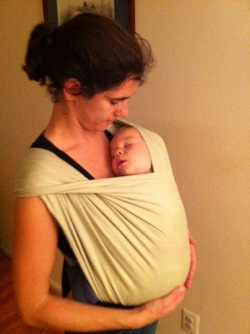
To secure a sleeping baby’s head in either FWCC or PWCC, you can tuck their head into one side of the cross pass that comes over your shoulder and pull the fabric away from the other side of the cross so that their face is visible and not covered as pictured here on the right.


Picture
If your baby doesn't want their head tucked but seems to need more head support, you can leave a little roll of wrap at your baby’s neck and tighten that well by snugging the top rail of the wrap.  If that is very snug, their head should stay put, even without a cross pass holding their head.  


Safety

Stretchy wraps should never be used for back carries.  They are stretchy and even if wrapped well are not safe and secure used on the back because the baby could lean and fall.  Here’s a video that shows how dangerous a stretchy wrap can be if used on the back.  

When wrapping, be sure to always remember TICKS: 
Tight
In View
Close enough to kiss
Keep chin off chest
Supported back 

Your baby should be held snugly and well supported, high enough to kiss, easily visible to you (without fabric covering baby’s face) and with chin off of chest.  You should be able to get two fingers under baby’s chin and hear baby breathing normally.  If you hear grunting or snoring sounds, that is a sign that baby is having trouble breathing.  If that happens, remove baby and rewrap being sure to wrap very snug and tight.  If you have any problems, feel free to contact us.  We can help you trouble shoot via email or facebook until you can come in for the next meeting.


Happy Wrapping!  If you need any help with your wrap, we'd love to help at any meeting.  

8 Comments

    Archives

    September 2015
    August 2015
    July 2015
    June 2015
    May 2015
    April 2015
    March 2015
    February 2015
    January 2015
    December 2014
    November 2014
    October 2014
    August 2014
    July 2014
    June 2014
    May 2014
    April 2014
    March 2014
    February 2014
    January 2014
    December 2013
    November 2013
    October 2013
    September 2013
    August 2013
    June 2013
    May 2013
    April 2013
    March 2013
    February 2013
    January 2013
    December 2012
    November 2012

    BWI of SO MD

    Babywearing International of Southern Maryland's mission is to promote safe and comfortable babywearing and to build a community of families in Southern Maryland.

    Categories

    All
    Breastfeeding
    Carrier Reviews
    Cold Weather
    Mei Tai
    Newborn
    Photo Tutorials
    Pregnancy
    Ring Sling
    Sponsors
    Ssc
    Stretchy Wrap
    Tandem
    Twins
    Woven Wrap
    Wrap Carries By Size

    RSS Feed

Powered by Create your own unique website with customizable templates.